Amazon Ads Not Profitable? Here’s What Actually Happened on My Account
The first week of November, my US sales ran 22% below where they were in mid-October. My ad spend hadn’t jumped, my bids hadn’t been cut, and nothing in my campaigns explained it. That’s usually the moment a seller decides advertising has stopped paying.
It wasn’t the ads. My best seller, a cutting board gel that makes up about a third of my US sales, had lost the Buy Box.
The short version
- When Amazon ads stop paying, check whether you still hold the Buy Box before touching bids: Sponsored Products only shows while you are the featured offer.
- In the first week of November 2026 my US sales ran 22% below their mid-October level because my best seller, a cutting board gel, lost the Buy Box; its share of my Sponsored Products impressions fell from 30–38% to 0.1%.
- Amazon's own daily report put the gel at 48.6% of its page views as the featured offer on November 4, while its 30-day figure still read 88%.
- A ten-cent price cut ($17.89 to $17.79) brought its ads back within the hour. The other seller had bought their stock from me; the lasting fix for a brand owner is to steer clear of wholesalers.
- Know what each sale can afford: at $17.89 the gel leaves $7.61 for ads and profit after Amazon's actual fees, product cost and freight, a break-even ACoS of about 42%.
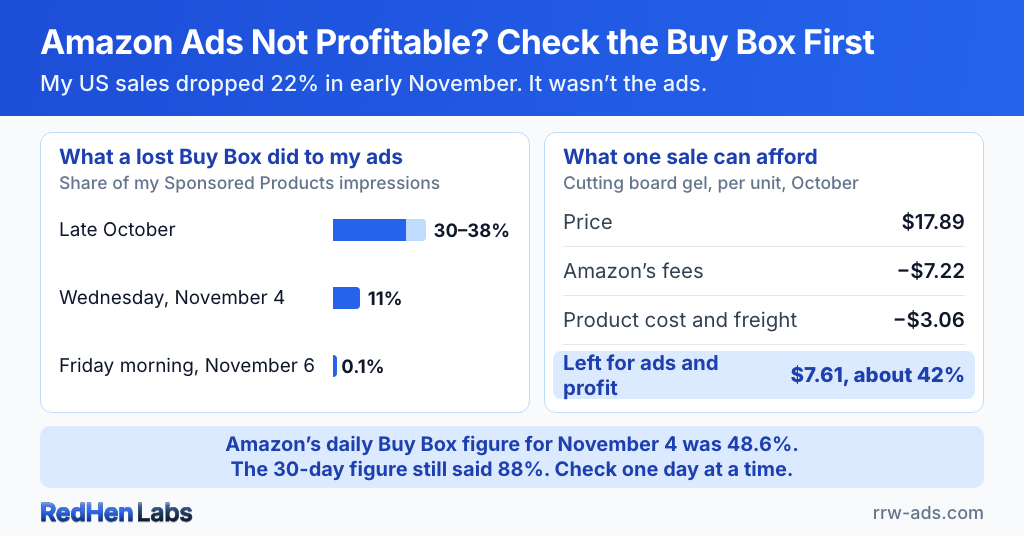
What a lost Buy Box does to your ads
Sponsored Products only shows while you’re the featured offer. Lose the Buy Box and those ads don’t get worse. They stop. In the last days of October, the gel’s Sponsored Products campaigns took 30–38% of my account’s Sponsored Products impressions. On Wednesday, November 4, they took 11%. By Friday morning, 0.1%.
Amazon’s own report for November 4 shows why. The gel was the featured offer on 48.6% of its page views that day. Its 30-day figure was 88%.
Two things made it hard to see:
- The 30-day number looked fine. A 30-day Buy Box of 88% hides a few bad days completely. When sales dip, check it one day at a time.
- Sponsored Brands kept running. My brand ads served the whole time, and a click through to the gel landed on a product page where another seller’s offer had the buy button. (How the two ad types differ.)
The ad account showed spend, the sales line showed a drop, and “my ads aren’t profitable” would have been the wrong conclusion.
What fixed it, and what prevents it
I dropped the gel’s price ten cents, from $17.89 to $17.79. Its Sponsored Products ads were serving again within the hour. A ten-cent cut fixed the same problem in October.
The other seller on my gel bought their stock from me. That’s how a brand owner ends up competing for the Buy Box on their own product, and it’s a real problem with unpleasant solutions: matching their price, running a repricer, giving up margin a few cents at a time. The real solution happens before your product reaches Amazon. If you own the brand, steer clear of wholesalers. Once someone else holds your inventory, you share the Buy Box with them.
Know what a sale can afford before you judge the ads
The other common reason ads “aren’t profitable” is that nobody worked out what a sale can afford. Here’s the gel, using what Amazon actually charged me per unit in October:
| The gel, per unit | October |
|---|---|
| Price | $17.89 |
| Referral fee | −$2.64 |
| Fulfillment (FBA) | −$4.54 |
| Other Amazon fees | −$0.04 |
| Product cost | −$2.55 |
| Freight to Amazon | −$0.51 |
| Left for ads and profit | $7.61, about 42% of the price |
On this product, an ACoS under about 42% makes money and anything above it loses money on the ad-driven sale. In October I ran its Sponsored Products at 51%, above that line, on purpose: I’m working to raise its sales velocity, and I know what each of those sales costs me. That’s a decision. Losing money without knowing it is something else.
My products run from about 27% to 49% (every one of them is in this table), which is why I judge ads product by product, never by the account average.
What I built because of weeks like this
RedHen Labs works out profit with what Amazon actually charged, product by product. As of this week it also reads Amazon’s daily Buy Box figure for each of your products, and when one you advertise falls well below its usual share, Insights says so, with the day and the numbers. The fix still happens in Seller Central. The point is knowing on day one instead of day five.
What to do this week
- In Business Reports, pick a single day and check the Buy Box percentage of your top products. Then check the day before.
- Work out what each top product can spend on ads: price minus referral fee, fulfillment, product cost and freight.
- If one product carries your sales, watch its Sponsored Products impressions. A sudden drop to almost nothing usually means you’ve lost the featured offer, not that your bids broke.
Profitable advertising starts with two facts about each product: what a sale can afford, and whether you’re still the one being sold. RedHen Labs keeps both in front of you.
Related reading
Do it step by step in RedHen Labs
Frequently asked questions
Why are my Amazon ads not profitable when sales are coming in?
Check three things in this order. First, whether you still hold the Buy Box on the products you advertise: Sponsored Products stops serving without it, so sales drop while other ad types keep spending. Second, whether each product's margin can carry its ACoS: the cutting board gel I sell leaves about 42% of its price for ads and profit. Third, whether an account average is hiding products that lose money.
Does losing the Buy Box stop my Amazon ads?
It stops Sponsored Products, which only serves while you are the featured offer. When my gel lost the Buy Box in November 2026, its share of my Sponsored Products impressions fell from 30–38% to 0.1%, while my Sponsored Brands ads kept serving, so a click through to the gel landed on a page where another seller's offer had the buy button.
How do I check if I lost the Buy Box on a product?
In Seller Central Business Reports, open sales and traffic by child item and pick a single day. A 30-day range averages bad days away: my gel's 30-day figure read 88% on a day Amazon's own daily figure was 48.6%. A sudden collapse in a product's Sponsored Products impressions is the other early sign.
Why would a brand owner lose the Buy Box on their own product?
Because someone else sells the same product and wins the featured offer, usually on price. On my gel, the other seller bought their stock from me. Price cuts and repricers can win it back but cost margin; the lasting fix is not to sell wholesale to anyone who will list your brand on Amazon.
Ready to automate the right way?
RedHen Labs combines rules with AI — and keeps you in control.